
FACES BEHIND NECTAR
This section features NECTAR officials in various roles to familiarise readers with the individuals and the purpose behind the project’s initiatives and interventions, as well as the strides made so far.
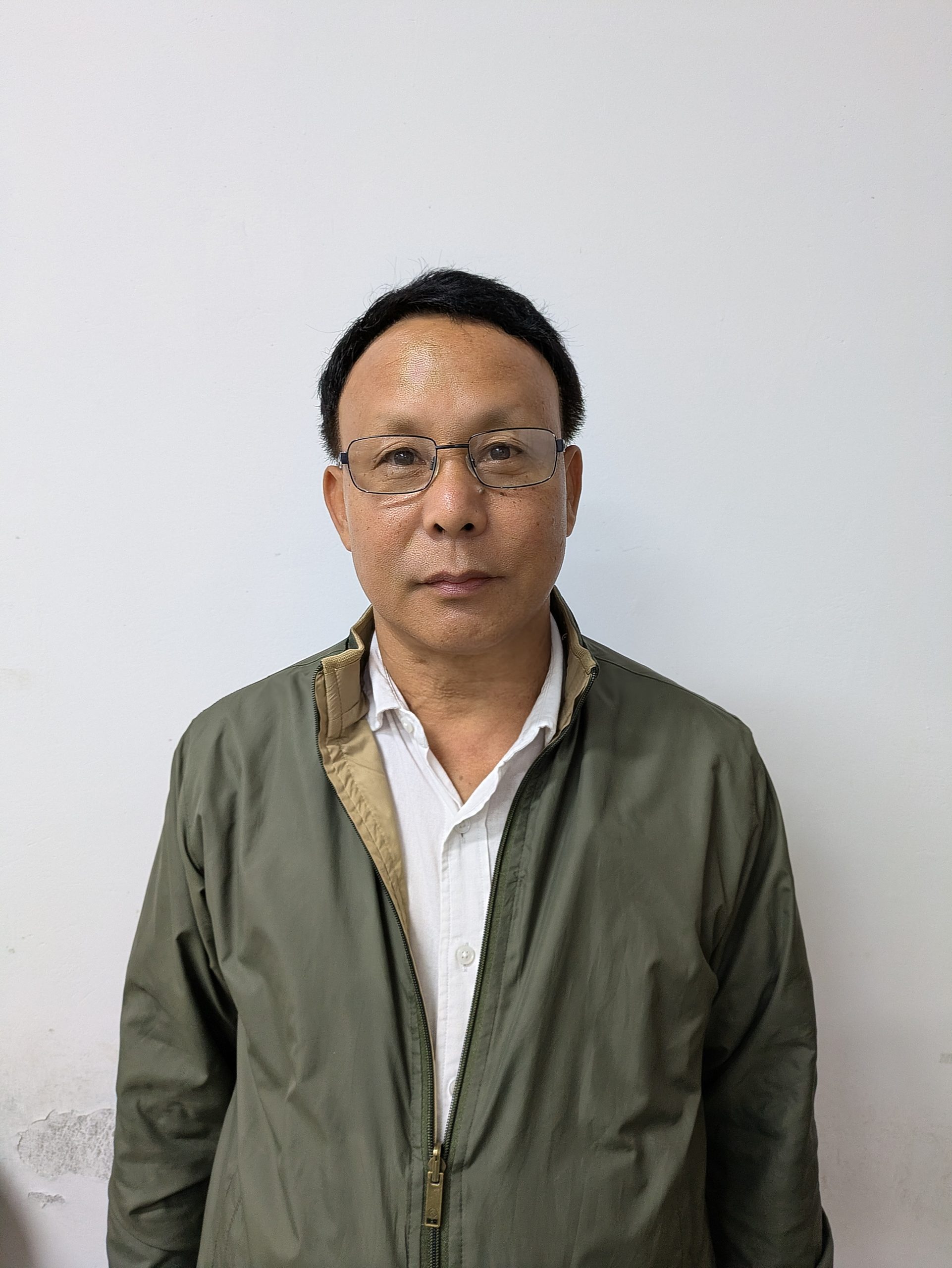
In this edition, we invite one of the Project Coordinators to comment on his association with the project.

Visato Koso
GT General, DoSE, &
Project Coordinator, NECTAR
- When did you join the NECTAR project, and what is your role in it?
I have been associated with NECTAR since its initial stage when the World Bank team first visited Nagaland for a case study sometime in October 2019. During the initial period, my role was to coordinate with the stakeholders. The World Bank Environment and Social Framework (ESF) mandates “Stakeholder Engagement Plan (SEP) Information Disclosure,” which recognises the importance of open and transparent engagement between the borrower and the project stakeholders. As such, my role was also to support the preparation of the SEP and other ESF instruments, followed by consultations with stakeholders virtually (due to COVID-related restrictions) during mid-2020. - As someone who was involved with NECTAR from its initial stage, could you highlight its importance to the Department of School Education?
The NECTAR project is very important to the Department because it came at a time when the Government school education system in Nagaland was characterised by low and declining learning outcomes, systemic weaknesses in quality approaches and teacher’s workforce management, as well as a lack of reliable data on teachers’ classroom performance. However, the arrival of NECTAR has impacted the Department’s state-wide reforms in the Government school system. The project has directly benefitted over 1,27,000 students [NK1.1]and around 18,000 teachers and school heads[NK2.1] through the education and career management programmes. Over 1,900 SMCs/SMDCs benefitted from the capacity-building programmes and gained insights into the performance of their schools, allowing them to access grants to undertake school improvement activities and take ownership of the school in the future. - You have closely coordinated the Performance Incentive Grants (PIG) programme, which concluded successfully. Could you comment on its unique concept and how it enhances efficiency and transparency in implementation, as well as the impact it has made on Government schools across Nagaland?
Performance Incentive Grants (PIG) promote a bottom-up planning model, enabling School Management Committees (SMC) and School Management and Development Committees (SMDC) to execute school improvement activities according to their localised needs. PIG mandates the physical assessment and approval of these activities by district administration officials. Additionally, the grants are directly transferred in tranches to the SMCs and SMDCs, subject to satisfactory performance. All these have greatly enhanced efficiency and transparency.
I’m proud to say that PIG has directly benefitted 1,914 government schools in Nagaland with an overwhelming 90.3% completion status. Under the PIG component, 205 GHS and 36 GHSS were given four sets of Bosch carpentry tools. PIG, no doubt, has impacted schools and fostered a sense of community participation and ownership. It has enabled schools to improve the learning environment and promote co-curricular activities
- Prior to your association with NECTAR, you had an extensive experience at the block level. In your observation, how has NECTAR enhanced collaboration among stakeholders, particularly at the ground level?
Prior to my association with NECTAR, I had the opportunity to work in the Sarva Shiksha Abhiyaan flagship programme as a Trainer of Teachers at EBRC Viswema for about nine years and then as Coordinator at EBRC L Khel, Kohima. From there, I came to NECTAR as a Project Coordinator. I must say that NECTAR has greatly activated block-level personnel by engaging them through frequent coordination and close monitoring of schools. I must also admit that earlier, there was less coordination between various stakeholders under the Department, but NECTAR has enhanced better collaboration among different stakeholders.
- Could you share a memorable experience or success story from the project that had a significant impact on a school or community?
I’m so fortunate to be a part of the NECTAR team as a Project Coordinator. My experience with the team has greatly enhanced my perspectives. My most memorable experience is the extensive tours to almost all district headquarters for capacity-building training on PIG, as well as the opportunity to meet and plan for SMCs and SMDCs on PIG structures and mechanisms. The real time success of the NECTAR project can be seen through the implementation of the PIG programme. It has brought the community together to improve the schools, contributing time, resources, ideas, and taking ownership of the schools.