
FACES BEHIND NECTAR
This segment features NECTAR officials in different capacities to enable readers to learn more about the people and intent behind the various initiatives and interventions of the project, as well as the strides made so far.
In this issue, we engage with the upcoming head of the Directorate of School Education (DoSE).
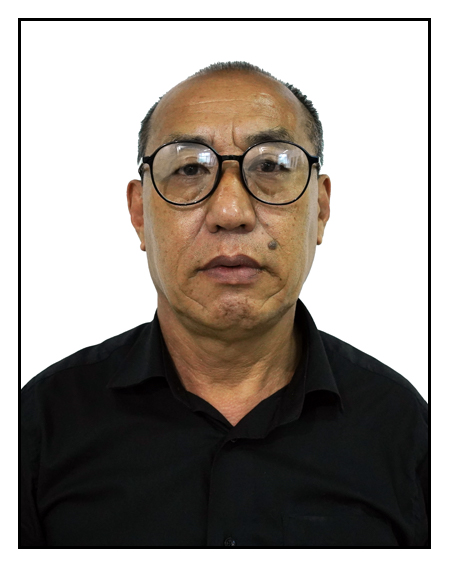
Shri Razouseyi Vese
Additional Director, DoSE &
Assistant Project Director, NECTAR
1. How long have you been associated with NECTAR?
A. I have been associated with NECTAR since February 2022.
2. Given the large size of the department and the associated challenges in administration and delivery of quality education, how is NECTAR supporting the department?
A. If the Government formulates effective policies, the department can be managed well regardless of its size. NECTAR is fostering community participation in school improvement by empowering the School Management Committee (SMC)/School Management and Development Committee (SMDC) through modest funds under the Performance Incentive Grant (PIG) programme. This has led to the enhancement of learning environments and the promotion of many cocurricular activities.
In collaboration with sister establishments of the Department, NECTAR is developing the Education Management Information System (EMIS), a centralised portal for comprehensive data management and access; this will aid the Department in efficient planning and administration. Further, the project is also supporting the strengthening of examination practices through improved assessment and evaluation practices; this intervention is also a step in the right direction.
The project is implementing capacity-building initiatives like the School Leadership Development Programme (SLDP), the subject-based and education-based Professional Learning Communities (PLCs), and Peer Group Leaders (PGLs). These interventions aim to equip system leaders for efficient assessment and management of schools and enable teachers to apply improved teaching-learning practices.
The development of an attendance marking system through the SMILE App is a positive step towards improving accountability. Beside this, supporting the Information and Communication Technology (ICT) needs of schools and all establishments under the Department of School Education with laptops serves to support the transition to a data-driven system for more efficient administration and school management.
3. One of the interventions of NECTAR is building the capacity of teachers and system leaders through extensive trainings. Can you comment on its efficacy and sustainability in the long run?
A. Building the capacity of teachers through trainings is essential; however, it should not coincide with the academic schedule, as this hampers the regular teaching-learning process. Teachers are occupied with the completion of the syllabus and often find it difficult to implement the lessons received from the trainings. Since the Department calendar is prepared in conjunction with sister establishments like SCERT and NBSE, training schedules should be worked out systematically so that, if the need arises, some of them can be conducted during vacations.
The efficacy of these trainings depends on how the teachers and system leaders apply them and how adequately assessments are made by the implementing agencies of NECTAR. Therefore, their dedication is of utmost importance. The sustainability of these trainings in the long run depends on Government support, as they are coterminous with the project.
4. What is your vision for school education in Nagaland, and how do you see NECTAR contributing to that vision?
A. My vision for school education is to revive the past glory of government schools that had a competitive and vibrant learning environment as students from neighbouring villages lived together in hostels and learnt from one another. There was a lot of inter-community exchange and learning took place outside the classrooms as well. Besides learning moral and social values, students and teachers practiced and learnt life skills such as preparing meals, handicrafts, weaving, and other traditional art forms. These schools produced academics, bureaucrats, doctors, engineers, and influential members of society.
To this end, the upcoming Lighthouse School Complexes (LSCs) with their hub and spoke model would help in reviving some aspects of the collaborative learning environment of the past. It is hoped that this model of collaboration will also lead to a more effective sharing of resources and exchange of ideas between schools.
5. What is your message to stakeholders of the NECTAR project as well as to the general public?
A. Core stakeholders such as teachers, students, system leaders, and SMCs/SMDCs have been cooperating and making the most of the NECTAR project. Their sense of ownership and participation have improved tremendously. Many community members have contributed raw materials and free labour and raised funds for improving the learning environment and outcomes. Even though it is taxing for the teachers to undergo trainings, they have been attending the trainings and putting in the extra effort to also complete the syllabus. The District Administration officers have also been playing a crucial role in monitoring the Performance Incentive Grant (PIG) utilisation and ensuring that it is effectively used for school development. Now we are getting a positive response from the community.
Their efforts are commendable, and I believe that all four core stakeholders—teachers, students, the community, and the Department—need to bear equal responsibility, like the legs of a table, for school education to stand firm and reach greater heights.