LIGHTHOUSE SCHOOL COMPLEXES (LSCs)
INCEPTION AND VISION
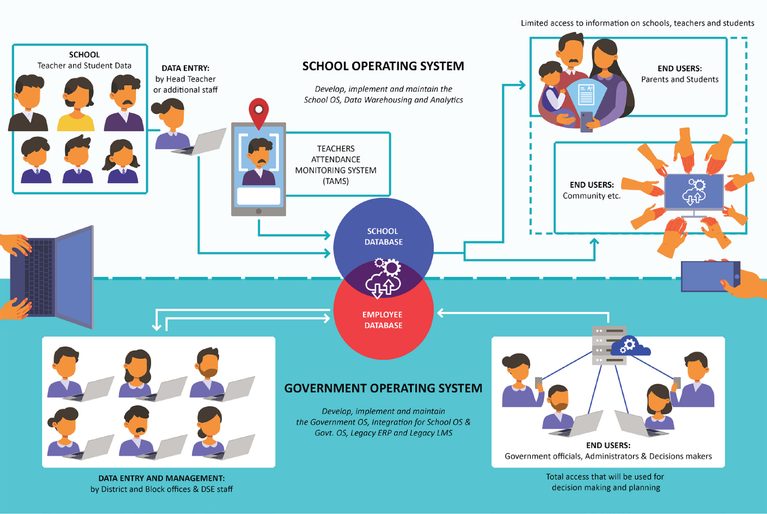
Government schools in Nagaland operate as isolated units and independently manage resources, day-to-day operations, staff availability, and contingent issues. In certain cases, there could be schools with excess teachers, while some schools in the area face staff shortages owing to long absenteeism or vacant positions. Student enrolment may also be skewed due to which the infrastructure and resources provisioned by the Government are not optimally used. For parents, the process of transitioning their child from primary to middle school and beyond can also be exhausting and complicated owing to the isolated nature of operation.
To address these challenges and more, the idea of Lighthouse Schools was conceptualised by Menukhol John, former Principal Secretary, School Education and SCERT in early 2019, drawing inspiration from Government schools in the distant past where students from surrounding villages studied together in a hub school. These schools innately possessed a vibrant learning environment where collaboration and healthy competition thrived. Students developed crucial life skills as learning continued beyond the classroom in the form of inter-community exchange. Government schools produced many professionals and eminent personalities, and the need for a revival of such an ecosystem was felt and eventually initiated.
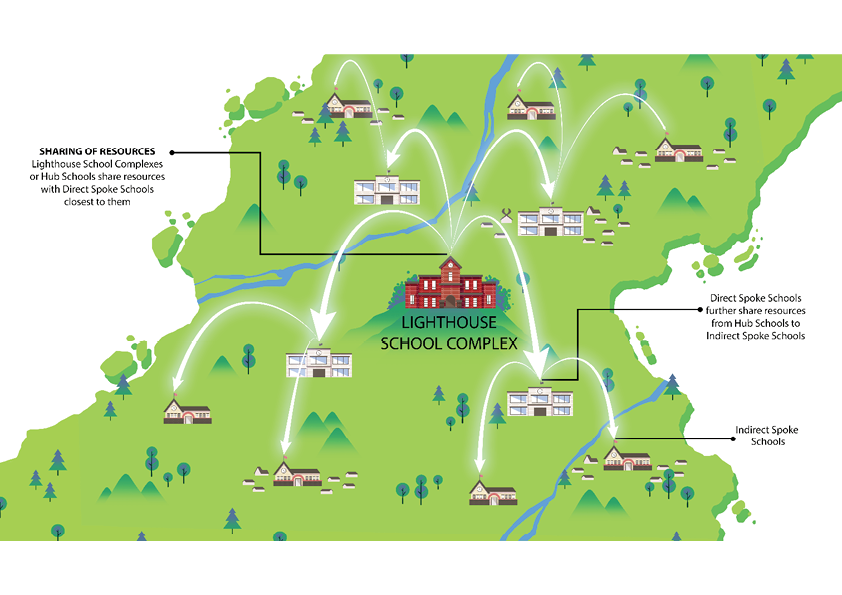
Therefore, Lighthouse Schools were envisioned to serve as hub schools in each district that would cater to surrounding spoke schools for optimum utilisation of resources, more efficient school management, and enhanced teaching-learning practices. To this end, the Department of School Education under the leadership of Menukhol John, submitted a proposal in 2019 to the World Bank. He stated that the project would re-orient the education system from a focus on inputs towards a focus on learning outcomes and provide a model for developing teachers as instructional leaders. He further explained that the proposal expects to support the systemic transformation in Nagaland’s teaching cadre, enhance the governance and management of schools, and boost student learning outcomes. Subsequently, the education team from World Bank conducted a ground study in Nagaland and assessed the viability of the project vis-à-vis the prevailing scenario. The proposal was approved in 2020 with the addition of several other interventions with the following objectives:
• Enhancing the governance of all Government schools
• Improving the teaching-learning practices
• Enhancing learning environments in selected school complexes
VISION STAEMENT
To develop Lighthouse Schools Complexes as hubs of academic excellence within a holistic learning environment fostering an inclusive, sustainable, evidence-based education system where local knowledge thrives amidst constant innovation.
CONCEPT AND SCOPE OF LSCs
Lighthouse School Complexes (LSCs) are envisioned as model schools with modern facilities that will function as hubs of academic excellence supporting neighbouring spoke schools. A cluster of primary, middle, and high/higher secondary schools will function as a school complex. This will address the challenges of isolation, resource shortage, staff availability, and day-to-day operation. Thus, schools in a particular LSC’s catchment area will achieve operational meaningfulness without physical consolidation. This networked system will also enable students to smoothly transition from primary level to middle and higher secondary levels, mitigating the problem of dropouts.
The conception of Lighthouse Schools in Nagaland precedes the National Education Policy (NEP) 2020, which coincidentally makes similar recommendations. Recognising the challenges associated with delivering a quality education in small and isolated schools, the National Education Policy 2020 recommends the formation of school complexes to ensure adequate resources, sharing of best practices, community involvement, effective school governance, and vibrant teaching-learning communities. In alignment with NEP, the NECTAR project is developing sixteen (16) LSCs in sixteen districts that will eventually operationalise the envisioned learning environment.
LSCs will therefore be spaces of holistic learning fostering inclusivity, strong community engagement, and constant innovation thriving on local knowledge of the communities. They will be economically and ecologically sustainable and also promote an evidence-based education system. They will lay emphasis on reaching out to the Socio-Economically Disadvantaged Groups (SEDGs) and provide learning spaces with adequate resources for Children with Special Needs (CWSN).
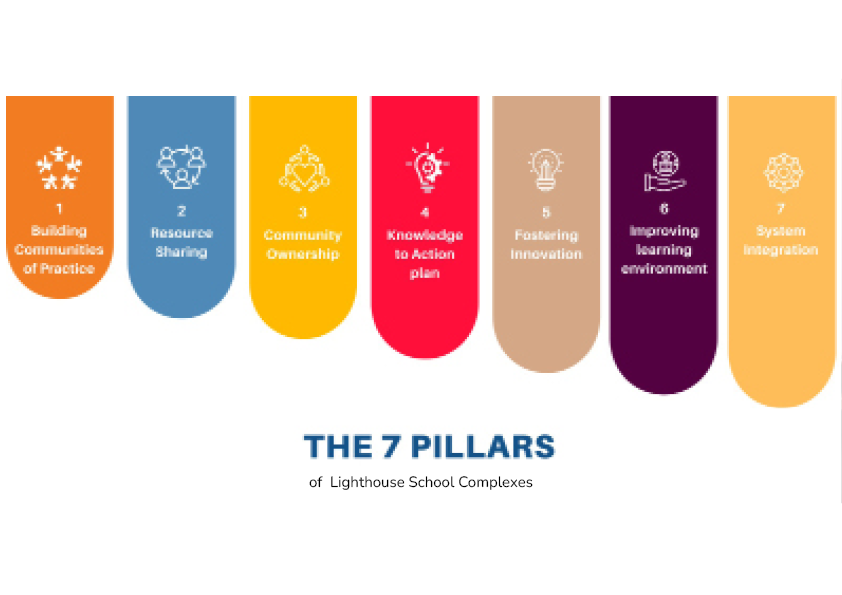
To realise the vision and objectives, LSCs are being developed along seven (7) conceptual pillars.
ENVIRONMENTAL AND SOCIAL STANDARDS
The World Bank’s Environmental and Social Standards (ESS) prescribe the following guidelines to protect people and the environment from potential adverse project impacts while promoting sustainable development.
Assessment and Management of Environmental and Social Risks and Impacts
Labour and Working Conditions
Resource Efficiency and Pollution Prevention and Management
Community Health and Safety
Land Acquisition, Restrictions on Land Use and Involuntary Resettlement
Biodiversity Conservation and Sustainable Management of Living Natural Resources
Respect for the Human Rights, Culture, Dignity, and Natural Resources of Indigenous Peoples/Sub-Saharan African Historically Underserved Traditional Local Communities
Cultural Heritage Protection
Financial Intermediaries
Stakeholder Engagement and Information Disclosure
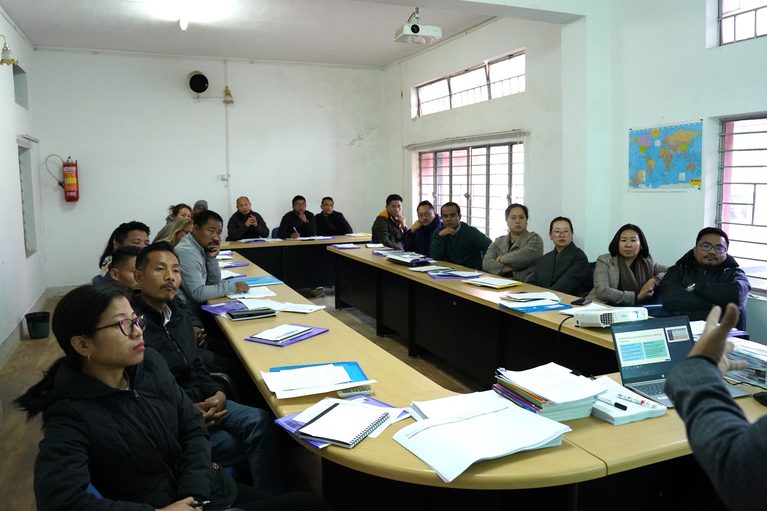
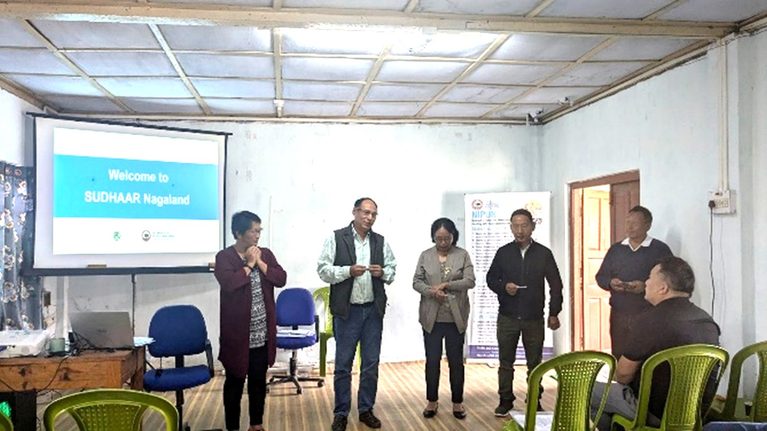
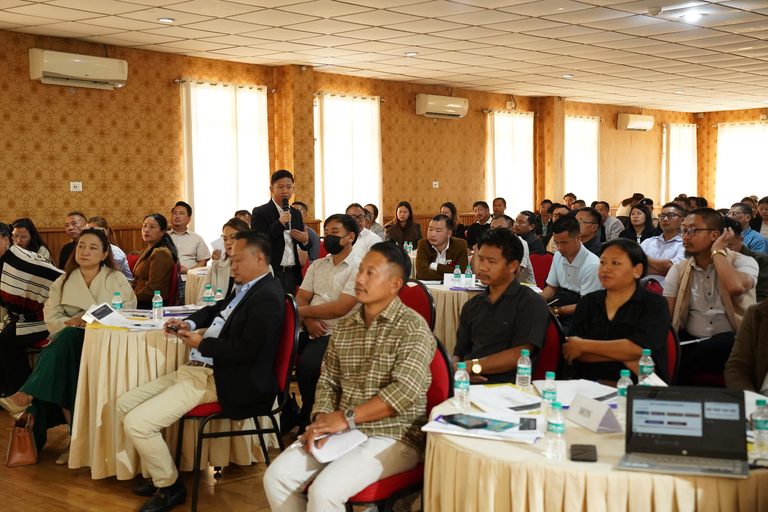
The Project Management Unit, in adherence to the said guidelines, has conducted state-wide orientation and sensitisation sessions with community stakeholders and the District Committee for Lighthouse School Complex (DCLSC) comprising the Deputy Commissioner, officials from relevant departments, Civil Society Organisations, and Faith Based Organisations.
SELECTION CRITERIA
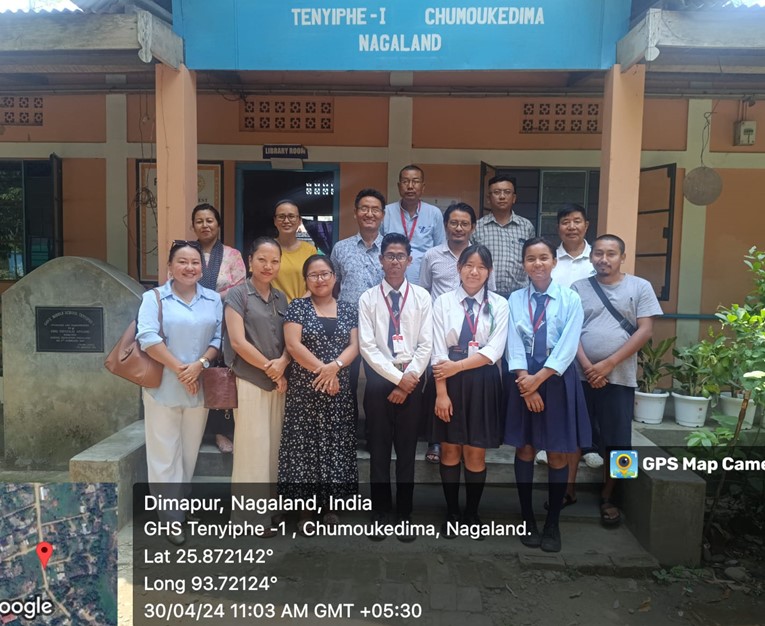
The sixteen LSCs have been identified through a rigorous four-stage screening process involving multiple stakeholders at the district and state levels and approved by the State Committee for Lighthouse School Complex (SCLSC). This entailed receiving the approval on the site assessment and geotechnical feasibility test and also ensuring that these schools conform to the vision and objectives of NECTAR. The sixteen LSCs are:
GHSS Medziphema Town, Chümoukedima
GHSS Dimapur, Dimapur
GHS Sitimi Town, Kiphire
GHSS Kigwema, Kohima
GHSS N. I. Jamir, Mokokchung
GHSS Peren Town, Peren
GHSS Phek Town, Phek
GHS Chessore, Shamator
GHSS Wokha, Wokha
GHSS Satakha, Zunheboto
GHSS Tuensang, Tuensang
GHS Angjangyang, Mon
GHSS Niuland, Niuland
GHSS, Bautung Phom Memorial, Longleng
GHSS Tseminyu Town, Tseminyu
GHS Noklak Village, Noklak
FACILITIES
LSCs aim to provide both curricular and co-curricular facilities based on the needs of the school in the district. Some of the facilities in the pipeline are:
Curricular And Co-Curricular
Facilities
Well-equipped library
Creative arts room
Physics, Chemistry, and
Biology labs
Tinkering lab
Computer lab
Vocational training room
Auditorium
Sports facilities
Service Facilities
Assembly space
Hostels for students
Rainwater harvesting
Power substation
Parking lot
Drainage system
Waste management
Store room
Natural disaster-resilient and safe infrastructure
Children with Special Needs (CWSN)-friendly spaces
Staff quarters within the campus
EXPECTED OUTCOMES AND IMPACT OF LSCs
Hub & Spoke model of resource sharing in the complexes wherein an entire area/block gets benefitted
Model Residential Hub Schools with facilities, which can be replicated in other parts of the State
Community taking ownership and accountability in the management of school complexes, which ensures sustainability even after the project period
Serve as Centres of Excellence accessible by students across all sections of society
Enhanced learning environments through Building as Learning Art (BaLA) that enable students to achieve improved learning outcomes.
CURRENT STATUS
Construction firms from all over Nagaland bid for the infrastructural development of the sixteen LSCs. Based on the technical and financial scores of the bidders, contracts were awarded to the best bidders. Consecutively, the contract signing was done between the winning contractors and the Department between November and December 2024.
The sixteen Site Engineers headed by the Project Engineer/Executive Engineer (Education Division) are overseeing the infrastructural development of all LSCs in sixteen districts. Work has begun since January 2025 in all LSCs, with Site Engineers of each district closely supervising the demolition of old structures, relocation of classrooms, and construction of alternative makeshift sites to ensure smooth functioning of school activities for the academic year. Work is progressing rapidly with the setting of the layout, excavation, and laying of the foundations of all 16 LSCs. Sub-structures (foundations) have also been set up in some sites.