PROFESSIONAL LEARNING COMMUNITIES
APPLYING BEST PRACTICES
Under the Governance and Capacity Building component of the NECTAR project, Professional Learning Communities (PLCs) comprising government school teachers and system leaders across Nagaland receive periodic capacity building support. This aims to transform teaching and learning practices, foster collaboration among educators, cultivate a culture of continuous learning and professional development among them, and enhance their digital literacy.
Following the completion of the 5th Phase PLC in-person training, teachers have returned to their classrooms equipped and motivated to implement the new strategies. The accounts below showcase inspiring outcomes as educators apply the effective insights gained from the training.

“There are so many things I have learned from the PLC sessions, but team teaching, 8 math teaching practices, peer learning, and peer assessment were highly beneficial for me and my students.”
Gautam Kumar Chettri
Subject President, Mathematics PLC, GHSS Peren
Gautam has actively attended all the five phases of PLC in-person training since 2023. Drawing from the sessions, he has been conducting classroom activities to enhance his teaching, and one such activity is presented here.
Topic: Group activity using graphs to determine Distance Formula and Section Formula
During the 5th PLC sessions, teachers learned how to engage students using a variety of practical activities designed to encourage active participation and deepen conceptual understanding. Based on this, Gautamencouraged students to arrive at the formulas independently by grasping the fundamental concepts rather than just memorising and using them. Students demonstrated increased engagement while participating in these activities, resulting in better understanding of the concepts. As a result, they were more comfortable solving problems of varying difficulties. Most students could derive the formulas with little or no assistance from the teacher. Many students expressed that it was not necessary to memorise formulas as they understood how they were derived, and they were also able to acquire proficiency in applying mathematical procedures.
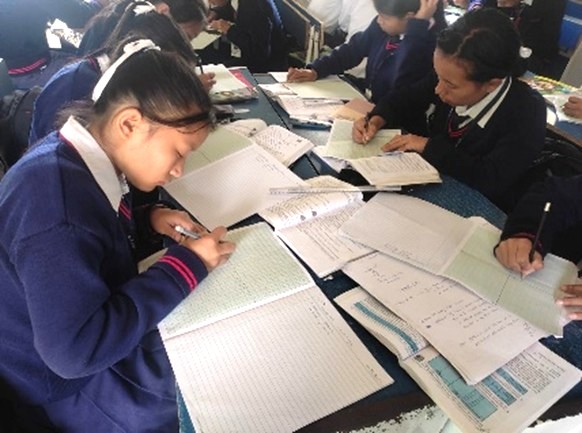
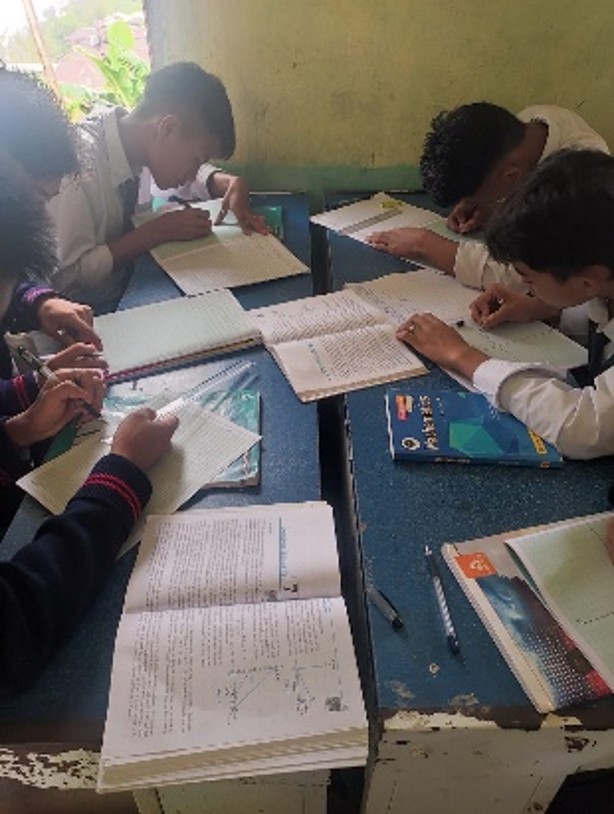
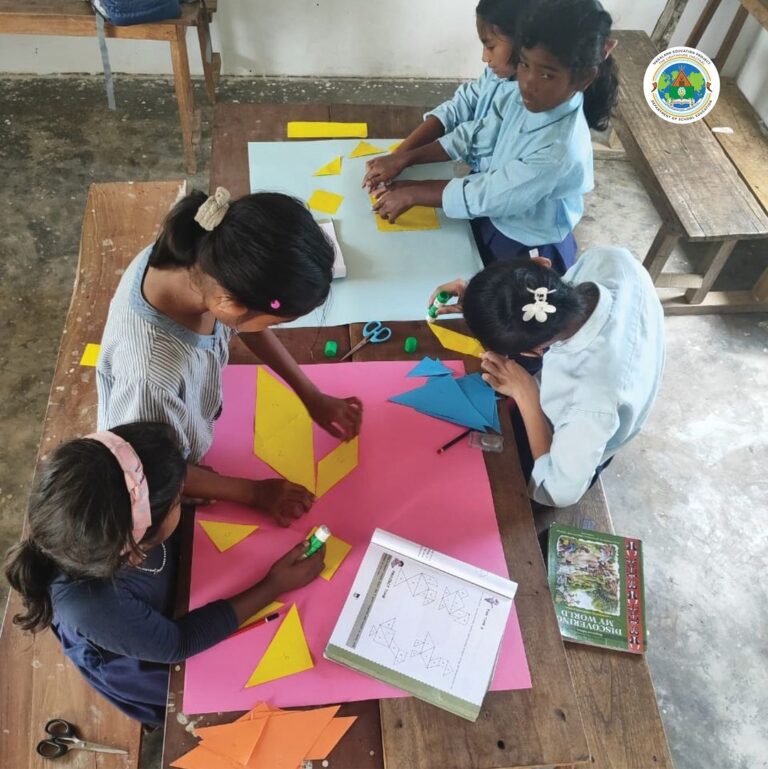
Students engaging in practical activities
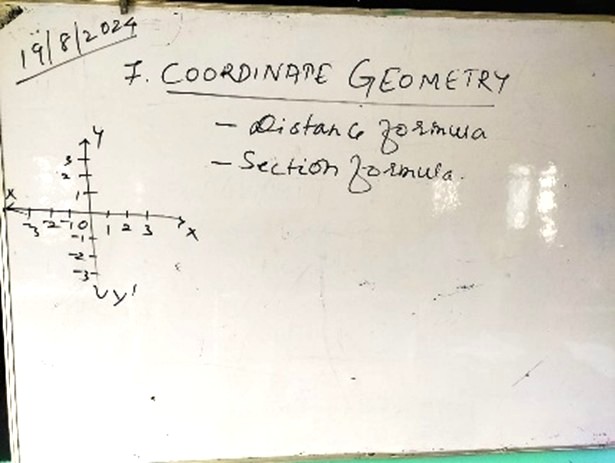
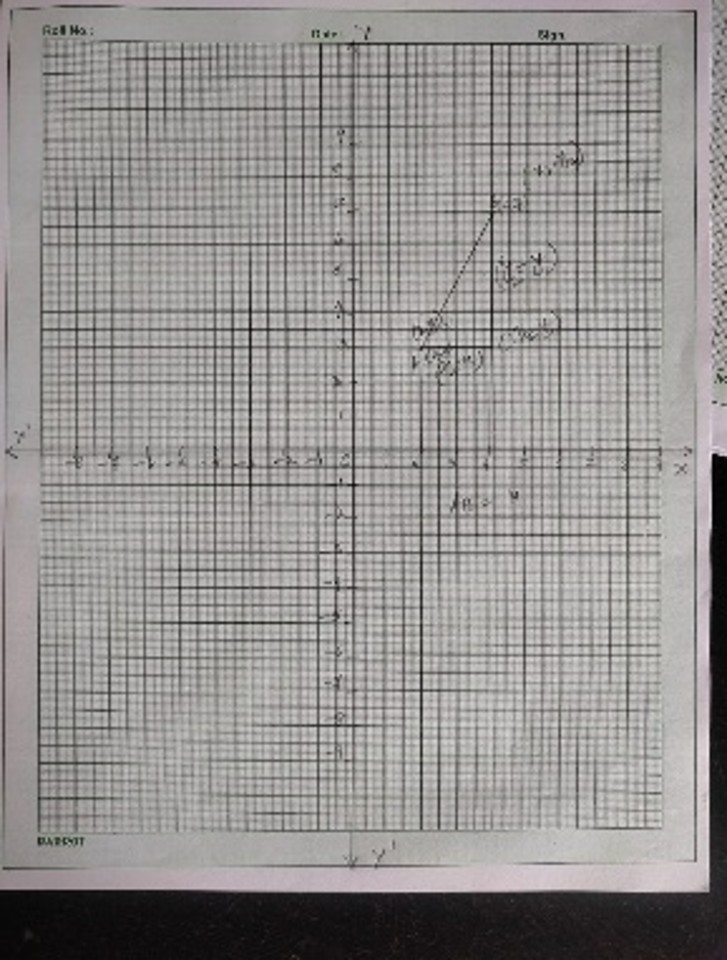
Samples of concepts and graphs used by students
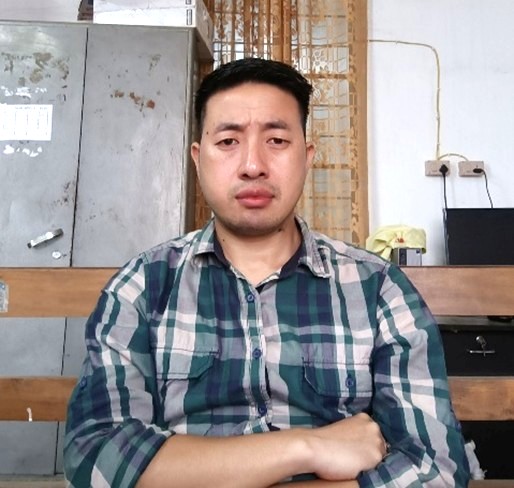
“During the recent PLC training, I had the opportunity to explore innovative teaching strategies aimed at improving classroom engagement and conceptual understanding, making physics more interesting and engaging. One valuable tool I discovered during my training was PhET Interactive Simulations.”
Moasoba Anichar
Subject President, Physics PLC, GHSS Mon
Moasoba has been an active member of the Professional Learning Community since the third phase of training in 2023. He has shown great enthusiasm during the in-person training, and over the years, he has transformed his classroom from a conventional learning space to a more interactive and concept-driven environment. He has applied the lessons from the training, and one of the activities is shared below.
Topic: Using PhET Interactive Simulations to demonstrate Faraday’s Law
After the 5th Phase PLC training, Moasoba conducted a classroom activity that sparked curiosity and heightened interest in learning among his students. Using Physics Education Technology (PhET), he introduced a simulation-based activity on Faraday’s Law in his class to help students visualize how changing magnetic fields induce current. The response was encouraging as students began to explore the simulation with enthusiasm. Compared to conventional teaching methods, this tool engaged the students more actively and enabled them to grasp the concept effectively.
The classroom visibly came alive, with many asking questions, experimenting independently, and requesting more such sessions. Moasoba shared this successful experience with his Physics PLC group and fellow colleagues, encouraging others to adopt similar tools. This simple simulation promoted a hands-on approach and significantly increased participation in the classroom.
Activity-based teaching not only made the lesson more interactive but also led to a deeper conceptual understanding among the learners. Moasoba’s dedication to implementing innovative strategies continues to inspire both his peers and students.
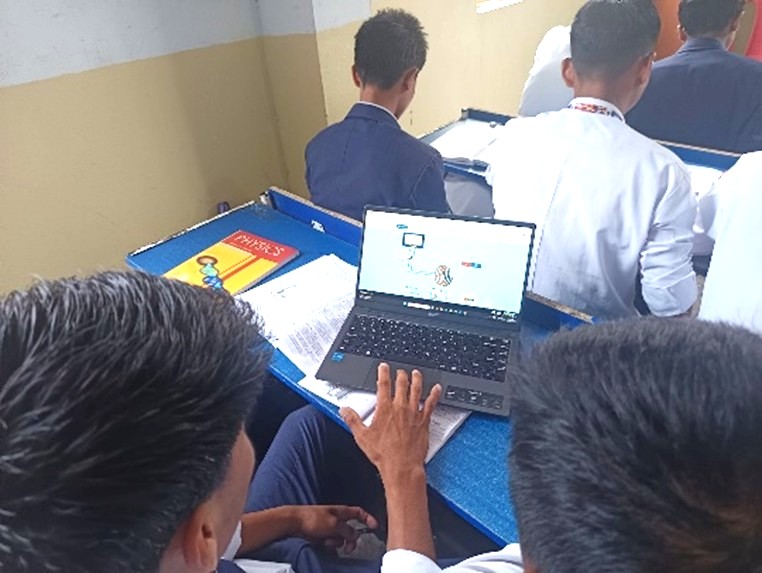
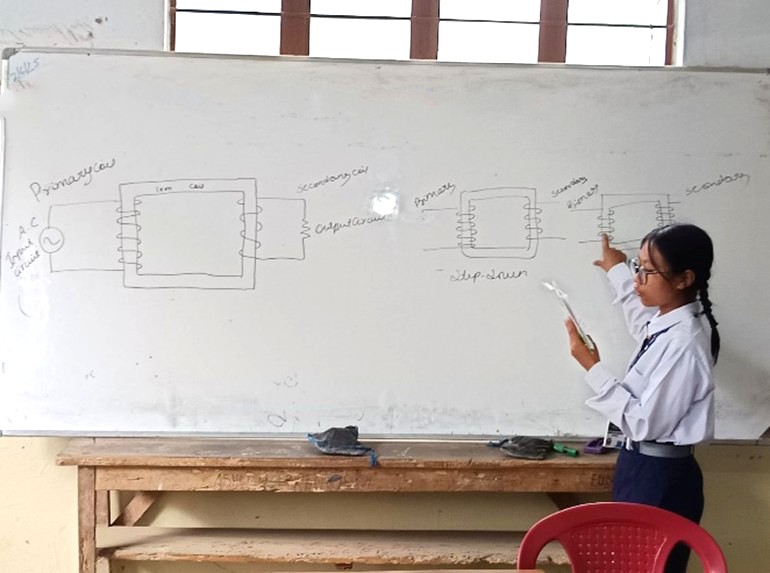
Students using the PhET Interactive Simulations and demonstrating the concepts