PROFESSIONAL LEARNING COMMUNITIE
APPLYING BEST PRACTICES
Under the Governance and Capacity Building component of the NECTAR project, Professional
Learning Communities (PLCs) comprising government school teachers and system leaders across
Nagaland receive periodic capacity building support. This aims to transform teaching and learning practices, foster collaboration among educators, cultivate a culture of continuous learning and professional development among them, and enhance their digital literacy.
Following the completion of in-person training, teachers have returned to their classrooms
equipped and motivated to implement the new strategies. The account below showcases
inspiring outcomes as educators apply the effective insights gained from the training.

Athungbeni R. Kithan
President, Secondary Stage, Science/Biology PLC,
GHSS, Zunheboto
Since 2023, Athungbeni R. Kithan has been an active PLC member, and she serves as the Science/
Biology PLC President for Zunheboto District. Participating in the capacity building programme
has been an eye-opening and enriching experience for her. Moving beyond traditional methods
of teaching, she has been employing innovative techniques to transform her classroom and raise
her students’ enthusiasm for learning.
Sharing her experience on the activities conducted in the classroom, Athungbeni remarked:
“PLC has been an insightful exposure for me. While each activity conducted in the PLC
commands its own importance, I personally discovered a treasure trove of useful information in the self-evaluation task based on the Teacher Competency Framework (TCF) and sharing of best practices. TCF paved the way to understand my own limitations and strengths, while hearing about the best practices from our fellow trainees made me realize that learning can be made fun through the use of illustrative and creative Teaching Learning Materials (TLMs)”.
There are sixty teachers in the Science/Biology PLC across Nagaland and twelve of them come under Athungbeni’s mentorship. As the Subject President for Zunheboto, her role includes convening online meetings, attending in-person training, and training other members. She optimistically asserts, “We encourage by doing. We share our activities in the group as a testament to the effort we put into making teaching and learning interactive and fun. Hopefully, this will inspire other teachers to do the same.”
Witnessing Athungbeni’s journey as a PLC participant has been inspiring. The experience has been transformative for her. She now finds genuine joy in creating interactive TLMs and designing engaging activities that allow her and her students to explore and learn by doing. The shift from traditional teaching to activity-based learning has empowered her students to express themselves more freely and confidently in the classroom.
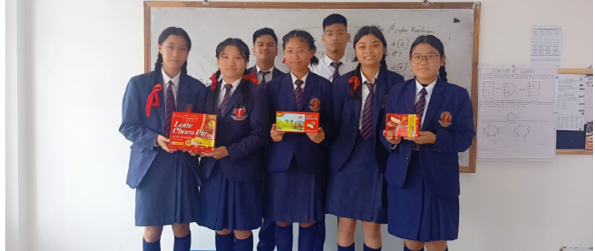
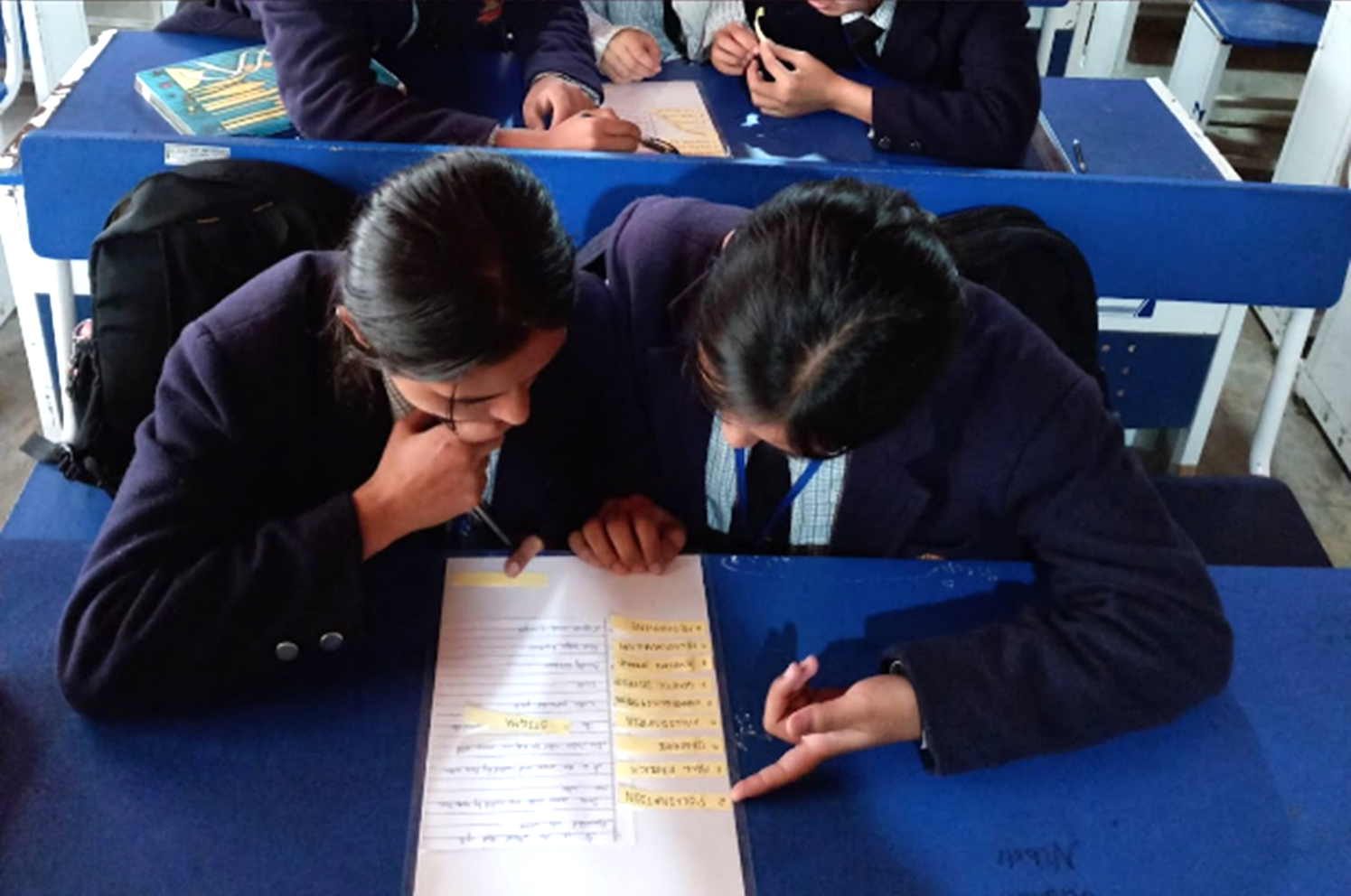
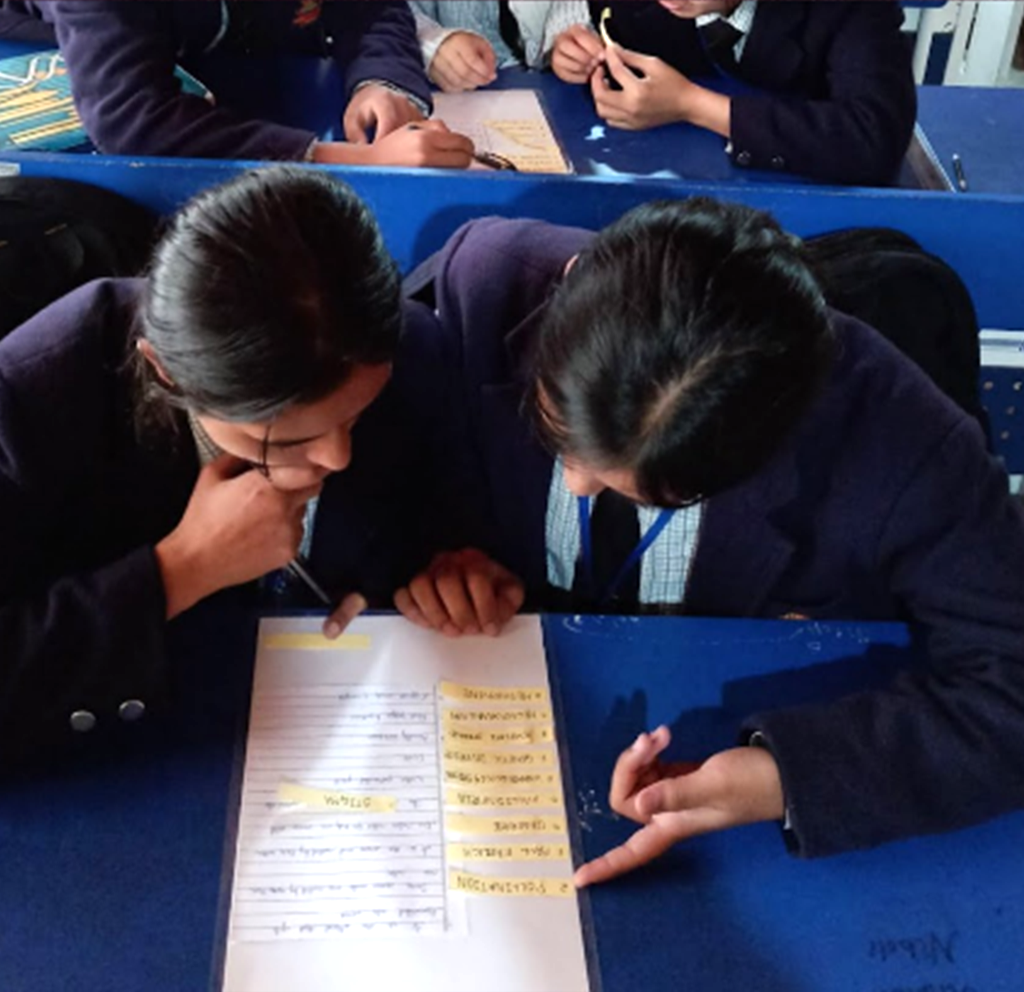
Athungbeni conducts activities that enable students to interact with one another while solving conceptual problems. It is encouraging to see the students exhibiting team spirit as they work through the problems. They use self-made learning materials that offer a multi-sensory experience and greatly enhance learning.
USING TLMs TO LEARN ABOUT MOLECULAR BASIS OF INHERITANCE
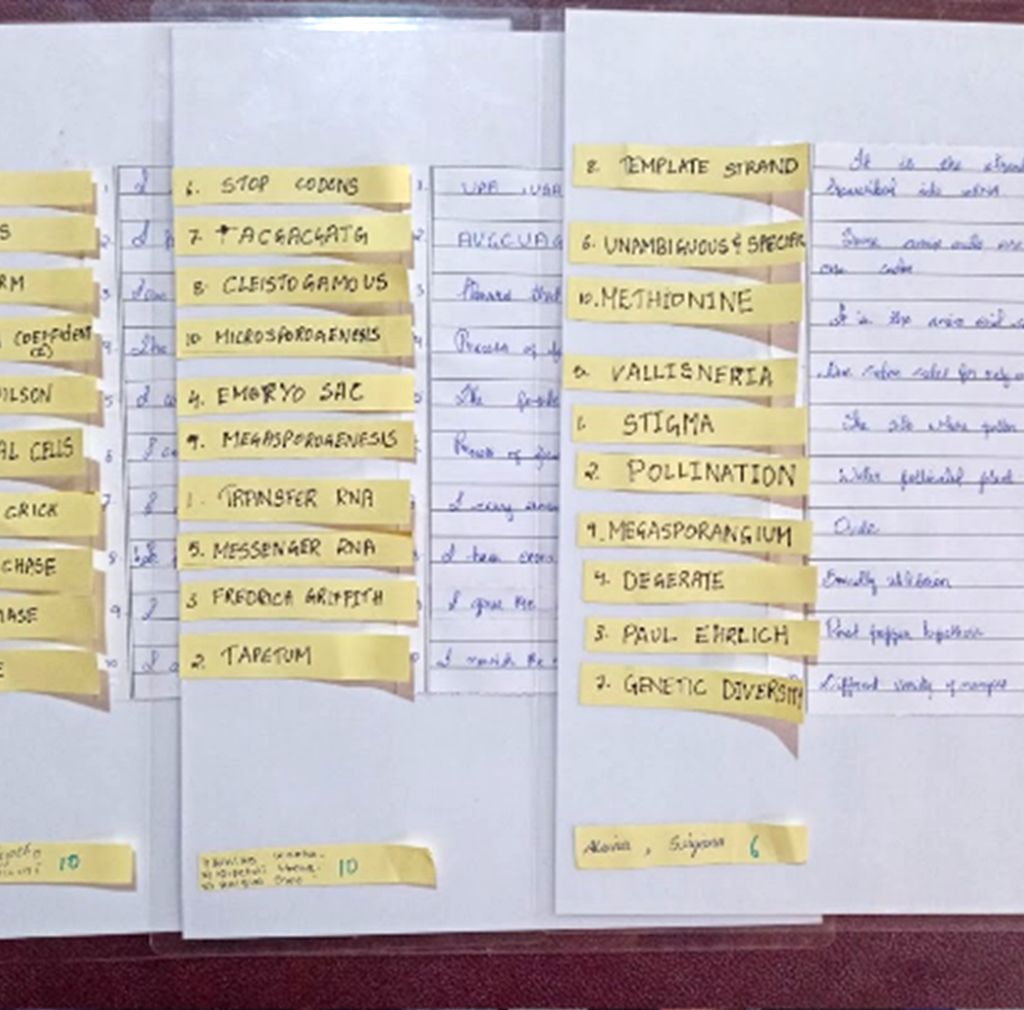
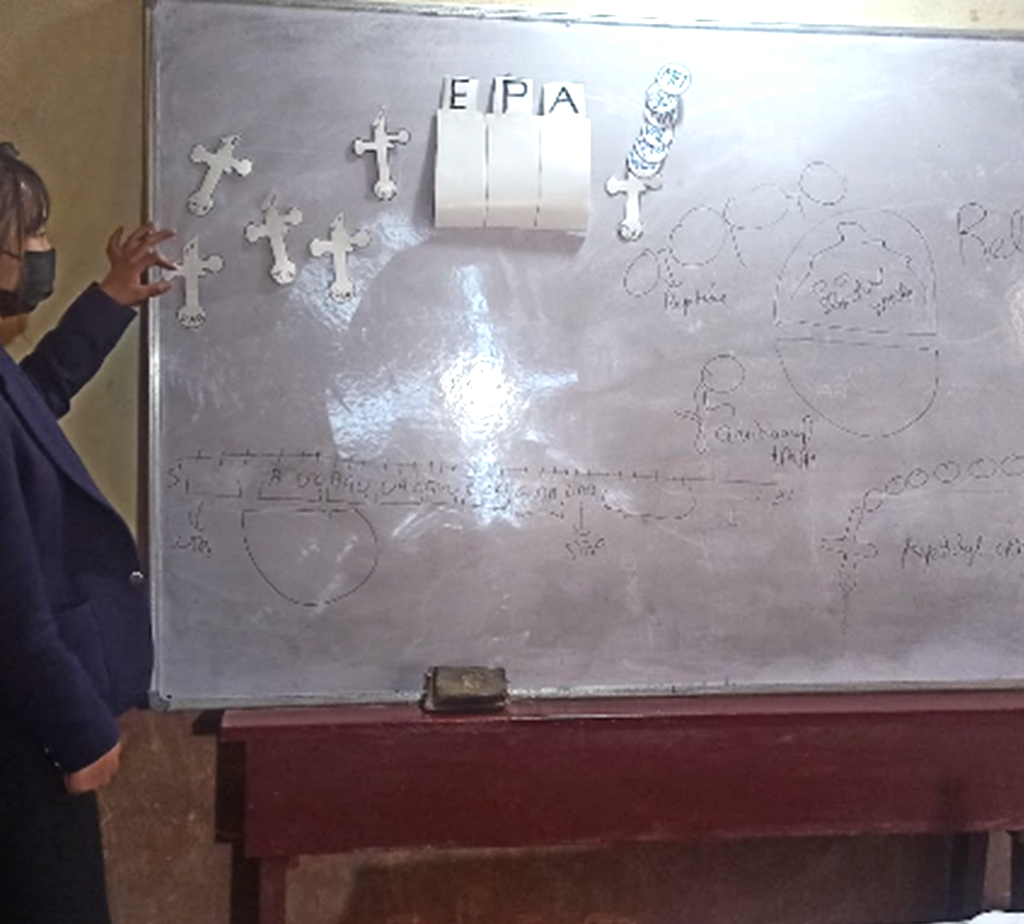
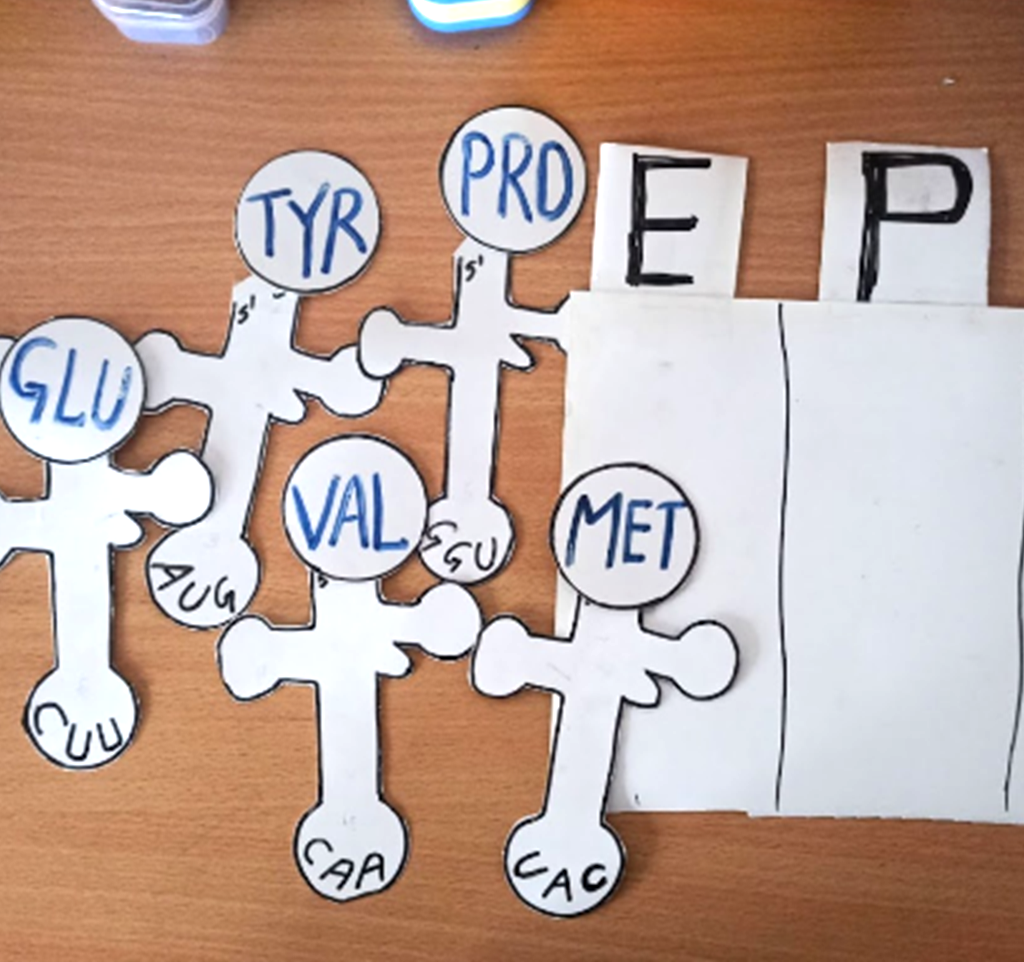
Athungbeni designed a creative and interactive teaching tool to explain the concept of DNA translation. This tool is a model made up of individual pieces representing different amino acids
like amino acids like Valine, Tyrosine, and Methionine. Students can take these pieces apart and
put them back together to build a chain of amino acids, just like how a polypeptide chain is
formed during DNA translation. This hands-on approach helps students visualise and actively
participate in understanding a complex biological process.
Responding to the efficacy of the new teaching method, a student of Athungbeni stated:
“Using TLMs was very helpful as it enabled us to visualise and remember the concepts. It was fun and I am looking forward to learn in this way even for the other concepts.”
Describing one of the activities, another student commented,
“Through it, I was able to recapitulate the concepts and also clear some of my doubts. Also, since it was a group activity, I learned the importance of teamwork and how we should listen to each other’s ideas”.
Professional Learning Communities (PLCs) are proving to be highly effective in transforming
teaching practices in Nagaland’s government schools. By moving away from traditional methods
and embracing innovative, activity-based learning supported by Teaching Learning Materials
(TLMs), educators like Athungbeni are not only enhancing their own professional growth but
also significantly improving student engagement and comprehension. Ultimately, this initiative
is leading to more effective and enjoyable learning experiences across classrooms in Nagaland.