Examination Reforms
FROM ROTE LEARNING TO CONCEPTUAL LEARNING
As part of the Strengthening School Leaving Certificate Examinations initiative under the NECTAR project, the Nagaland Board of School Education (NBSE) with support from the former, has embarked on a significant journey of Examination Reforms. It seeks to strengthen the examination systems for Class 10 and Class 12 to align with the National Education Policy (NEP) 2020, which emphasises a shift from rote memorisation to deeper conceptual understanding.
The reforms necessitate extensive capacity building of various stakeholders, and for this purpose, the technical partner Educational Initiatives (Ei), was engaged in two phases. The team was stationed on site for the entire duration of the engagement (10 months each phase) to ensure in-depth comprehension and effective delivery. During the preliminary stage, the following activities were conducted to inform the design of workshops:
- Extensive stakeholder consultations with relevant officials from NBSE, DoSE, and SCERT
- School visits
- Data collection across representative sample schools to understand the context
- Secondary data analysis of existing structures, documents, processes and question papers
Reimagining Examinations in Line with NEP 2020
The NEP 2020 envisions an education system that cultivates critical thinking, creativity, and problem-solving abilities. Responding to this national vision, Nagaland’s High School Leaving Certificate (HSLC) and Higher Secondary School Leaving Certificate (HSSLC) examinations are undergoing a comprehensive reform.
The reform process is being carried out in two strategic phases, designed to introduce systemic changes grounded in international and national best practices and tailored to Nagaland’s specific educational needs.
Phase 1: Laying the Foundation for Reform
The first phase of reform focused on transforming the question-setting approach for both HSLC and HSSLC examinations. The aim was to replace traditional recall-based questions with those that assess higher-order thinking skills while adhering to the existing curriculum. This intervention was carried out over a 10-month period, from 8 June 2022 to 5 April 2023, in collaboration with the technical partner, Educational Initiatives.
A detailed and exhaustive review of the Nagaland Board of School Education (NBSE) was conducted. This assessment examined the entire exam lifecycle—from pre- and post-examination processes to assessment frameworks, marking schemes, and curriculum standards. Based on the findings, an Action Plan Report was developed, highlighting key areas requiring improvement with recommendations.
The report focused on six thematic areas:
- Strengthen core assessment areas towards competency-based assessments.
- Use technology to enhance pre- and post-examination processes for building robust and quality-oriented systems.
- Build capacity for NBSE and its schools on competency-based assessments.
- Undertake advocacy for assessment reforms in the larger ecosystem.
- Collaborate with Education Department’s sister establishments to encourage schools toward innovative practices.
- Optimise the data architecture system and enhance functionality of current technology platforms (websites, mobile applications, Education Management Information System (EMIS), etc.).
To support these efforts, extensive capacity-building initiatives were also carried out, targeting item creators, evaluators, and related education personnel to build institutional expertise.
Phase 2: Scaling and Sustaining Reforms
Building on the foundation laid in the first phase, the technical agency Educational Initiatives was re-engaged in the second phase (July 2024 – April 2025) to support the execution of key recommendations outlined in the Action Plan. These efforts were informed by global best practices and aligned with NEP 2020 and the National Curriculum Framework (NCF) 2023.
Four critical areas were prioritised:
- Strengthening Evaluation Practices: Emphasising collaborative item creation (paper setting), mock evaluations, and inter-rater reliability to enhance consistency and fairness.
- Strengthening Inclusive Assessments: Ensuring equity by tailoring assessment frameworks for Children with Special Needs (CWSN) and other vulnerable groups.
- Strengthening School-Based Assessments: Improving pedagogical approaches at the school level to reinforce continuous and formative assessments (timely tests).
- Strengthening Paper-Setting Structures: Standardising the design and development of examination papers to reflect the shift towards conceptual learning.
These reforms aim to create a robust, inclusive, and forward-looking examination ecosystem that supports diverse learners and enhances educational outcomes across the state.
[1] Item creators, also known as paper setters, are high-performing teachers selected by the NBSE to create examination question papers.
Capacity Building Workshops conducted in Phase 1 & 2
Workshop 1: Strengthening Assessments in Nagaland
- Date: 22–25 November 2022
- Participants: 55
- Organisations: NBSE, DoSE, NECTAR, NECTAR PMU
- Objectives:
- Introduce international best practices in assessments
- Emphasise need to improve current assessment practices
Workshop 2: The Art & Science of Question Making
- Date: 16–21 January 2023
- Participants: 223 (High School teachers, NBSE, SCERT, DoSE officials)
- Subjects: English, Hindi, math, science, social science
- Objectives:
- Teach principles of good assessment design
- Promote use of competency-based questions in assessments
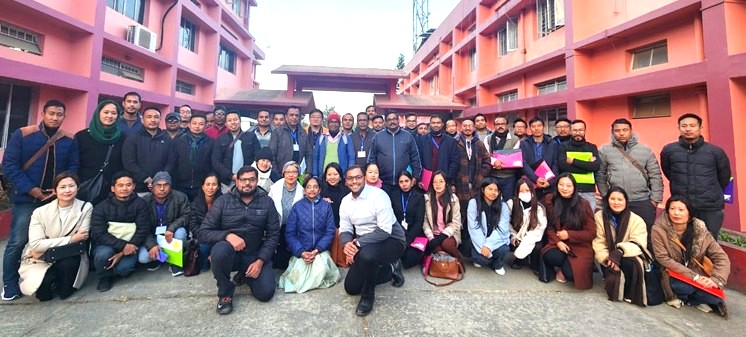
Workshop 3: Strengthening Evaluation Practices (Mock Pilot)
- Date: 15–17 October 2024
- Participants: 143 (Teachers of class 10 & 12, NBSE officials)
- Subjects: English, math, science, social science
- Objectives:
- Introduce the concept of Marking Scheme
- Conduct mock pilot to show inter-rater variability without the Marking Scheme
Workshop 4: Inclusive Assessments
- Date: 11-13 December 2024
- Participants: 133 (Teachers of classes 1-12, Inclusive Education Resource Persons (IERPs), NBSE & SCERT officials)
- Objectives:
- Introduce the concept of inclusion and highlight the differences between inclusion, accommodations, and segregation
- Provide the IERPs and teachers with tools that can make classrooms and assessments inclusive
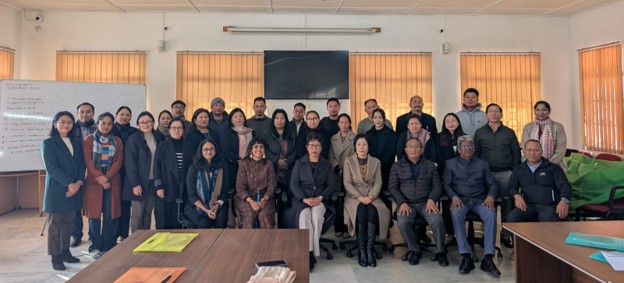
Workshop 5: Strengthening Paper Setting Structures
- Date: 28–30 January 2024
- Participants: 158 (Teachers of classes 8–12)
- Objectives:
- Create good skill-based questions
- Practice collaborative item creation and review
- Make summative assessments inclusive
- Promote ideal and inclusive question creation practices
Workshop 6: Strengthening School-Based Assessments
- Date: 18-20 March 2024
- Participants: 163 (Government and private school teachers teaching classes 5-12. The cohort also included mentors and presidents from the Professional Learning Communities activated across Nagaland.
- Objectives:
- Design of school-based assessments (formative assessments) – from identification of Learning Outcomes (LOs) to the design of school-based assessments
- Execution of school-based assessments and using data to inform pedagogy – evidence-based teaching-learning and remediation plans in the classroom
Workshop 7: Transitioning from Answer Key to Marking Scheme
- Date: 27 September 2024
- Participants: 15 (NBSE officials, Core Group)
- Objectives:
- Introduce marking scheme
- Highlight role in reducing inter-rater variability
Workshop 8: Transitioning from Paper Design to Blueprint
- Date: 4 October 2024
- Participants: 15 (NBSE Officials, Core Group)
- Objectives:
- Introduce learning outcome-aligned blueprint
- Emphasise shift from paper design to blueprint for better learning measurement
Workshop 9: Creating Learning Outcomes (LO)-Aligned Blueprints
- Date: 2 April 2025
- Participants: 15 (NBSE Core Group, Subject Matter Experts (SME), officials)
- Objectives:
- Revise why the board must consider transitioning from a paper design to a blueprint
- Practical activity for officials to create a blueprint aligned to LOs, along with a desired MUA division of items[2]
Workshop 10: Creating Marking Schemes
- Date: 22 April 2025
- Participants: 15 (Core Group, SMEs, Officials)
- Objectives:
- Revise why the board needs to consider transitioning from an answer key to a marking scheme
- Practical activity for officials to create subject-wise marking schemes for sample questions that were provided to them
Workshop 11: Change Management Plan – Handover
A final handover workshop will be conducted on May 1, 2025, with all key education stakeholders—including officials from SCERT, DoSE, and NBSE—to review the interventions and recommendations, and to discuss their implications for the state with a focus on institutionalisation.
[1] Mechanical, Understanding, and Application (MUA) refers to different levels of cognitive skills based on Bloom’s taxonomy. These categories help in designing balanced question papers that test not only memory (Mechanical) but also comprehension and problem-solving skills (Understanding and Application).
Prospective Outcomes
The NBSE team, led by the former Chairperson Asano Sekhose, has been an exceptional partner, demonstrating strong commitment, collaboration, and efficiency in working closely with NECTAR to incorporate key assessment reforms. Their technical rigour, proactive approach and openness to reforms have been instrumental in driving the process forward. NECTAR is optimistic and looks forward to seeing NBSE institutionalise several critical reform areas, thereby further enhancing the standards and quality of examinations and results in Nagaland.