
FACES BEHIND NECTAR
This segment features NECTAR officials in different capacities to enable readers to learn more about the people and intent behind the various initiatives and interventions of the project, as well as the strides made so far.
In this issue, we engage with the Chairperson, Nagaland Board of School Education.
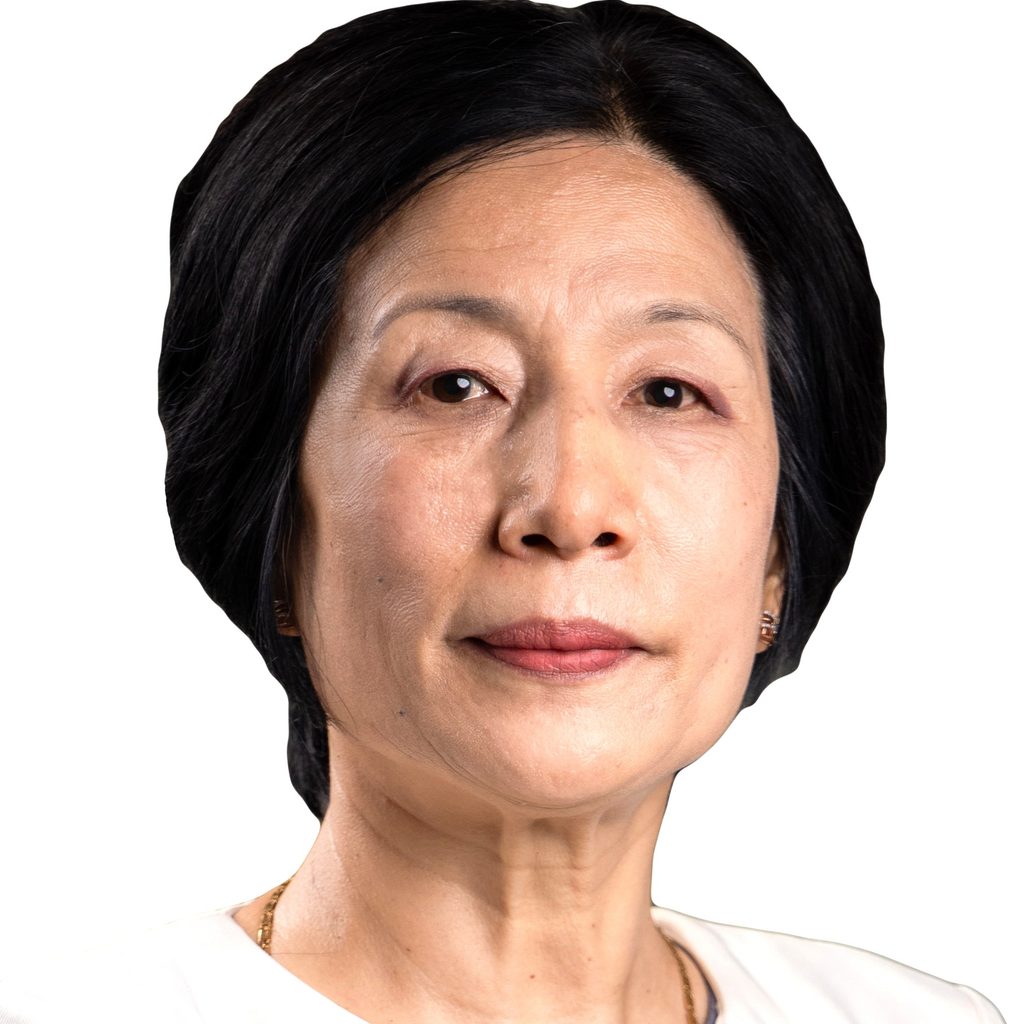
Smt. Asano Sekhose
Chairperson, Nagaland Board of School Education
1. How long have you been serving in the Nagaland Board of School Education (NBSE)? Can you kindly share about your journey and experiences of heading one of the most important institutions for school education in Nagaland?
Answer: I joined NBSE as Academic Assistant in 1990 and served in various capacities for the last 35 years. I am fortunate to have joined the Board at a crucial time when it had to chart its activities to align with policy changes to bring about improvements in academic and examination practices in the state. My journey is full of learning experiences that involved understanding the process of curriculum and syllabus development, examination processes of how to prepare guidelines for paper setting, and preparation and analysis of results. The Board has given a lot of importance to monitoring the academic standard of the affiliated schools and organising in-service teacher development programmes for the teachers to elevate the standard of education in the state.
In 1990, the Amendment of the NBSE Act 1973 empowered the Board to prescribe courses and conduct examinations for higher secondary level. It was a huge exercise for the board to prepare the curriculum, syllabus, and textbooks for the higher secondary level. With the upgradation of four Government High Schools to Government Higher Secondary Schools, the first HSSLC examination was conducted in 1995.
The Board has put a lot of effort into promoting meaningful learning experiences and making assessments relevant to measure the learning outcomes of the students. The Board worked through ups and downs, trials and errors, overcoming various challenges to bring Nagaland’s educational system at par with the rest of the country.
2. The NBSE under your leadership has undertaken many initiatives to elevate school education in Nagaland. Can you please highlight some significant steps that were taken for the same?
Answer: The Board’s goal is to bring about qualitative changes into the education ecosystem to meet the ever-evolving requirements of the learners. Some of the initiatives taken are:
> Vocational Education is mainstreamed and introduced as an optional subject in the secondary level and higher secondary stage from 2014.
> In 2023, a certificate course on Financial Literacy was made compulsory in all schools registered under the Board.
> Introduced Phase I & II examinations for Class 8 and 9 w.e.f. 2021 to reduce stress and curtail dropout rates in line with NEP recommendations.
> Reviewed and made suitable modifications in the curriculum and examination system to address the needs of students with disabilities in 2022.
> Rationalised syllabus of NCERT was adopted and implemented w.e.f. 2022 academic session with the objective of reducing content load and providing opportunities for experiential learning and promoting creativity as envisioned in NEP 2020.
> Competency-based questions was introduced in 2023 and incorporated in the textbooks w.e.f. 2024 session.
> To help failed students save a year and reduce failure rate, HSLC Compartmental Examination was introduced in 2015. Two chances are given to students to clear the subject(s) and Credit Transfer Policy was also introduced from 2024.
> Various digitalisation initiatives to improve efficiency in data collection and ease the burden of schools in the submission of particulars of students/teachers/reports etc.
3. How is the collaboration of NBSE and NECTAR strengthening the Examination Reforms initiative?
Answer: The collaboration of NBSE and NECTAR is playing a significant role in advancing the Examination Reforms initiative, such as the shift towards Competency Based Education and Holistic and Inclusive Assessment. The reforms aim to create a balanced and student-centric education system, shifting from rote memorisation to fostering skills, developing critical and analytical thinking skills, creativity, and lifelong learning as envisioned by the National Education Policy (NEP 2020) and National Curriculum Framework, School Education (NCF-SE 2023). The examination reforms will be integrated into the teaching-learning and assessment process, providing continuous feedback that helps both teachers and learners identify areas for improvement while reinforcing the understanding of Competency Based Assessment.
4. What outcomes are anticipated as a result of the Examination Reforms initiative?
Answer: In line with the NEP 2020 recommendations, the Exam Reforms initiative focuses on the professional development of Board officials and teachers for a more informed learning outcomes for students. The initiatives are expected to help students develop essential skills and knowledge, fostering their overall holistic development. The knowledge and resources gained through the NECTAR Project will strengthen and enable NBSE towards a learner-centric approach, placing students at the centre of learning processes. These initiatives are expected to foster a culture of innovation, equity, and excellence in education, making a significant contribution to the State’s socio-economic development and positioning its success in the global knowledge economy.
5. You have had a distinguished career that has impacted many students and school education in Nagaland as a whole. As the NBSE prepares for the transition to a new leadership, what is your message to the community of school education in Nagaland?
Answer: The policy changes could be implemented successfully by the Board with the support and cooperation of all the stakeholders. I would like to recognise the tireless efforts of everyone in nurturing the students to succeed in their careers.
I am confident that the NBSE will continue to guide and support a vibrant learning environment that will enable an era of academic excellence and foster students’ holistic development and community engagement. My sincere request goes out to all the stakeholders to embrace change, support and encourage one another to fulfil the goals of education and achieve greater heights.